
Learn everything there is to know about a design trend that's here to break dimensions and engage audiences: 3D illustration.
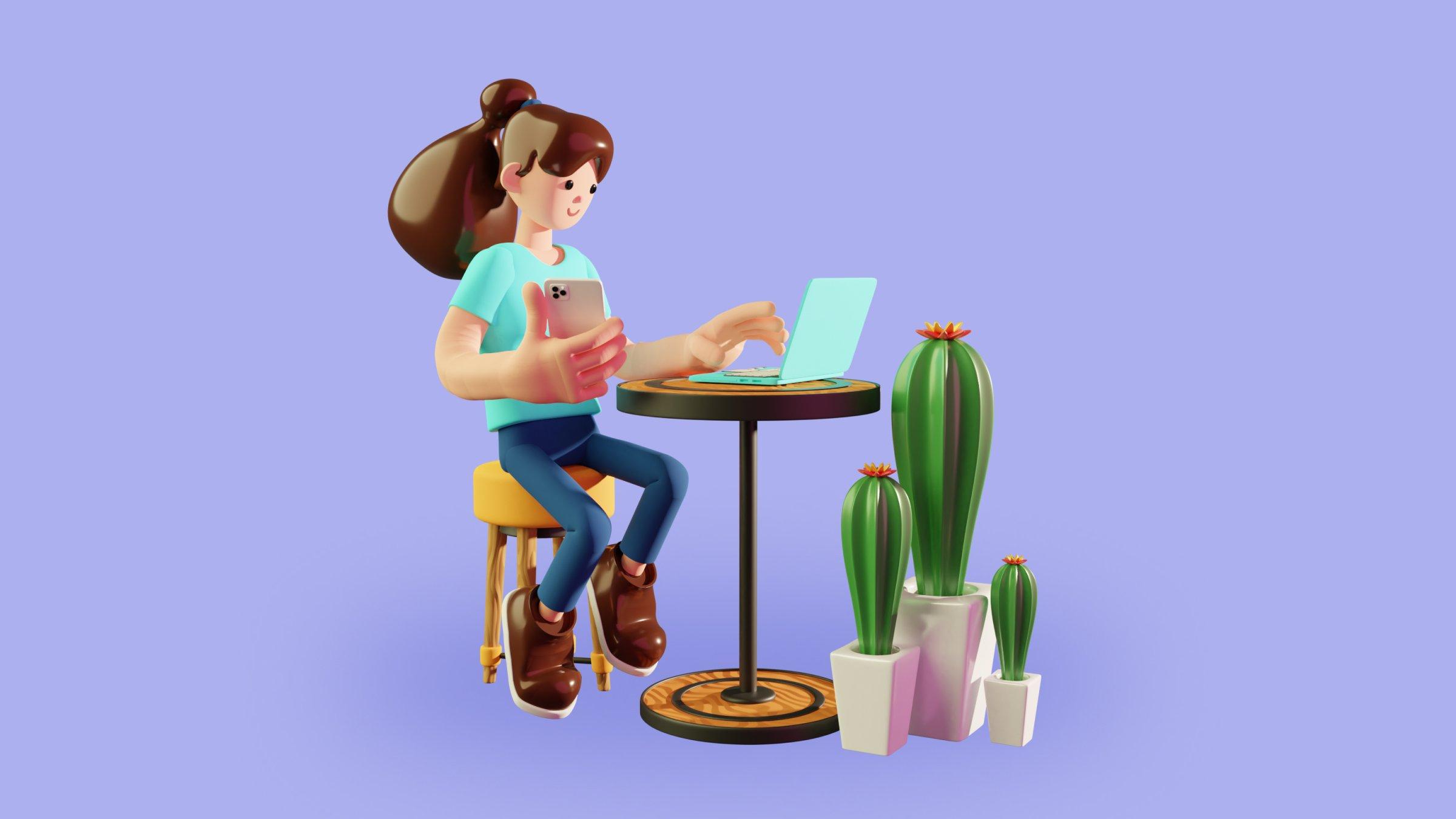


3D illustration is the bold, dimensional trend transforming flat graphics into immersive experiences across branding, social media, websites, and packaging.
From Spotify’s vibrant campaign visuals to Nike’s futuristic product launches, 3D design has gone mainstream. Just take a look at Khyati Trehan’s Instagram, where abstract meets tangible in mesmerizing digital environments to create stylized 3D art.
Why should you care? 3D is having a huge resurgence, especially since generative AI came into the picture. So, whether you’re designing for tech, fashion, or content creation, using 3D illustration helps you stay on top of the trends and gives your work depth, impact, and a serious creative edge.
What is the 3D illustration trend?
The 3D illustration trend is all about bringing bold, playful, and often surreal digital art to life with depth and dimension. It ditches the flat graphics of old in favor of sculptural, animated, or ultra-tactile elements that seem to pop right off the screen. Think exaggerated characters, soft blobby shapes, surreal mini-worlds, and vibrant color palettes that feel like they belong in a Pixar-meets-Memphis fever dream.
This trend has surged thanks to tools like Blender, Cinema 4D, and Adobe Substance making 3D creation more accessible to everyday designers. Plus, the rise of AR, VR, and interactive web experiences means audiences now expect more than just static visuals. They want movement, texture, and stories they can almost touch.

If you like this, use this prompt for a similar result:
3D render of a balloon dog sculpture, made of colorful glass, isolated on a white background, minimalistic, negative space design, color grading, clean and simple designs, modern aesthetics in the style of product photography, high resolution
But beyond the tech, 3D illustration taps into something deeper: a craving for fun, imagination, and escapism. Whether it’s a hyper-detailed food ad or a quirky, soft-edged mascot for a fintech startup, these visuals have range — and they’re seriously good at standing out.
And for brands and creatives on a mission to be memorable, 3D is the power move.
There are plenty of ways to use this 3D design trend. You can do everything you could imagine with it. Artists like Amrit Pal Singh (known for his “Toy Faces” series) use 3D illustration to reimagine iconic figures with personality and texture, proving that even portraits can feel alive in this format.
Watch this short video to see how quickly a 2D sketch becomes a dynamic 3D render.
Key characteristics of the 3D illustration trend
But what makes up this 3D illustration trend? Knowing the key traits will help you incorporate 3D illustration effectively in your next projects.
1. Depth and dimension
A core appeal of 3D illustration lies in its physicality. Unlike flat, 2D graphics, 3D visuals incorporate realistic layers, light sources, and shadows to simulate volume and space. Artists often use techniques like parallax scrolling, depth of field, and perspective distortion to make elements appear to leap off the screen. This creates a sense of immersion that draws viewers into the scene and conveys a tactile, almost tangible quality.

Try this prompt in GraphicsGen:
Abstract 3D layered building blocks with vibrant primary colors, dynamic composition, and clean geometric shapes. Use a soft, diffused light to create depth and subtle shadows. Render with a smooth, matte finish to enhance the tactile quality and modern aesthetic.
2. Hyperreal or surreal styles
3D illustration offers a broad stylistic spectrum — from precise photorealism to dreamlike, surreal aesthetics. Hyperreal illustrations replicate the fine details of real-world textures, materials, and lighting. On the other hand, surreal 3D art pushes boundaries, bending physics, forms, and logic to create imaginative, otherworldly visuals. This stylistic flexibility enables brands and creators to tailor their messages, whether aiming for familiarity or fantasy.

3. Playful proportions
A common hallmark of 3D illustration is its embrace of exaggerated forms. Think oversized heads, tiny limbs, or characters with cartoon-like expressions — these elements inject personality and charm. This stylization, often inspired by toy design or claymation, helps to humanize complex or abstract concepts, making them more relatable and memorable. It’s especially effective in storytelling, product marketing, and UI design where user engagement is critical.

4. Vibrant colors and textures
3D artists use a wide palette of finishes — glossy plastics, matte ceramics, brushed metals, and velvety fabrics — to add visual interest and realism. These textures interact dynamically with lighting, enhancing the mood and narrative tone. Combined with bold, saturated colors or gradient schemes, 3D illustrations can evoke emotion, guide the viewer’s attention, and reinforce brand identity. The tactile nature of these textures also enhances accessibility by mimicking real-world materials.

Try a prompt like this if you’d like a similar result:
Opulent array of diamond jewelry, 3D render. Include dazzling bracelets, sparkling rings, regal tiaras, and exquisite necklaces. High resolution, dramatic lighting, luxurious presentation.
5. Immersive scenes
Many modern 3D illustrations go beyond isolated objects to depict entire environments—living rooms, cityscapes, imaginary worlds, or futuristic laboratories. These scenes often feature intricate details and coherent design systems that invite exploration. Whether static or animated, they encourage storytelling through composition, scale, and spatial relationships. This world-building capability makes 3D ideal for campaigns, websites, games, and interactive experiences.

Get this 3D illustration with this prompt:
A lone knight in ornate armor stands on the edge of a snowy mountain cliff, sword on the back, dark night sky above full of stars and lit by a big moon, with soft clouds, winter wind blowing the cape, cinematic digital painting.
Brands using the 3D illustration trend
OK, let’s gather some inspo from the real world. These are a few examples of brands using three-dimensional design masterfully.
1. Spotify Wrapped visual campaign
When December rolls around, Spotify users know it’s Wrapped time. Besides presenting them with their favorite music, they create a visual campaign that’s engaging and goes with the topic perfectly.
Why it worked: Vivid, fluid three-dimensional design elements personalized each user’s experience.
Get the look with Envato:


2. Nike product drops
Nike is one of the kings when it comes to marketing. Whenever the company has a new product drop, it goes all out with art that complements it.
Why it worked: Futuristic, sculptural renders make sneakers feel like collectibles.
Get the look with Envato:
3. Nintendo Mario Kart World art
Video games like Mario Kart World are super exciting. Not only that, but they have artwork that makes people want to play.
Why it worked: Stylized 3D art with colorful, rounded scenery and characters that give off an energetic vibe.
Get the look with Envato:

How you can apply the 3D illustration trend in your work
Now you know what 3D illustration is and have seen examples of how others have used it. Let’s get to the good part: how to make this 3D illustration trend work for you. When you’re working on your next project, use 3D illustration for:
- Social media: Create eye-catching icons and 3D product visualization mockups that will jump off the screen.
- UI/UX: Use 3D to make onboarding animations and immersive app visuals that will keep people hooked.
- Marketing: Get all eyes on your next project by adding a 3D touch to things like product packaging renders and billboard designs.
- Editorial: Who says people don’t read anymore? Put together some custom 3D illustrations for blog headers or magazine layouts to bring people in.

Try this prompt in ImageGen:
New York City skyline at night, glowing skyscrapers, vibrant city lights reflecting on the dark water, clear night sky filled with stars, cinematic, photorealistic.
A brief history of the 3D illustration trend
Let’s go back, way back, to an undisclosed time in the 70s. Yup, 3D design began decades ago. Here’s a quick rundown of 3D animation’s journey:
1970s–80s: Born in engineering and science, 3D graphics were used for simulations and CAD.
1990s: Hollywood adopted it (Toy Story, Jurassic Park), bringing 3D into pop culture. Not to mention, videogames jumped on the trend and have never let go.
2000s: Brands used three-dimensional design for product mockups and advertising; software like Maya and Cinema 4D became standard.
2010s: Tools became more accessible (e.g. Cinema 4D, Blender, and Spline); artists began using 3D to experiment and create stylized, creative illustrations.
2020s: Social media popularized playful stylized 3D art, and there was a surge in 3D use on Behance, Dribbble, and Instagram.
Now: AI (ahem, ImageGen and GraphicsGen) and web tools make 3D creation faster and easier than ever. This made 3D creation less technical, and a lot more fun.

For this specific 3D illustration, use:
This is a CGI (Computer-Generated Imagery) render of a highly detailed robotic hand. The hand is made of a polished, reflective metal, possibly chrome, and is pointing its index finger upward. The scene is lit with dramatic blue and pink/magenta lights that reflect off the metallic surface, creating a futuristic, cyberpunk aesthetic against a stark black background.
3D illustration trend FAQs
Finally, let’s explore some common questions about 3D illustration so you can start creating kickass projects with it.
1. Is 3D illustration only for advanced designers?
2. What software is best for creating 3D illustrations?
3. Can I use 3D design in branding?
4. Is 3D illustration good for web design?
Yup, 3D in web design is a great idea. It’s especially effective in landing pages, hero sections, and app onboarding.
5. How does AI impact 3D illustration?
Generative AI (like ImageGen and GraphicsGen) speeds up modeling, texturing, and prototyping, making 3D design faster and more accessible. Basically, with the right AI prompt, you can create any 3D illustration you could ever think of.
Get started with 3D illustration — with help from Envato

Here’s a prompt you can use in ImageGen:
Fragmented marble statue, classical style, shattered torso, Grecian aesthetic, smooth texture, light and shadow play, soft teal background, minimalist composition, studio lighting, elegant decay.
3D illustration gives you endless possibilities, which is why it’s a trend that’s here to stay. Especially with the rise of AI and hyperreal AI-generated content, you’re bound to see more 3D illustrations than ever before. Whether you’re creating bold visual identities or immersive brand campaigns, 3D illustration can give your work the edge it needs in 2025.
Ready to make your designs pop? Explore Envato for the best 3D assets and start building your next dimensional masterpiece. Or, if you feel like playing and creating new and impressive stuff, try ImageGen and GraphicsGen to create your wildest 3D dreams instantly. That’s right: you get access to millions of premium assets from Envato and their full AI stack with your subscription. Give it a try now!
Check out even more 3D design resources.


